Planting Roses
Depending on the time of year you purchase your roses, you will have a choice of types of roses:
Bare-root roses: These are only available from about May till mid July, usually by mail order. These are plants dug from open ground and packed to prevent the roots drying out before sale. Bare-root plants are good quality the same as if you had purchased in person. They should be planted as soon as received, or if ground conditions are unsuitable, unpacked, soaked and kept in a container of slightly moist compost and planted as soon as conditions allow.
Potted roses: These are at their best in the nursery from about May/June. They will be available to buy like this for longer into the spring and summer, but you may have less to choose from as popular varieties sell out quickly. They should be soaked in their pot then planted as soon as received.
When to plant roses
Bare-root roses: Plant in late autumn through until late winter to early spring, before growth resumes. Avoid planting in the middle of winter if the ground is frozen.
Potted roses: Plant all year round, provided the ground is neither frozen, nor very dry.
How to plant your roses
Here are some steps to planting roses in the garden:
In the area where the rose or roses are to be planted, mix in at least one bucket of well-rotted organic matter per square metre, forking it into the top 20-of soil. Compost or Farmyard manure is ideal for this.
For each rose dig a hole roughly twice the width of the plant's roots and the depth of a spade's blade.
Carefully remove your rose from the container.
Place the rose in the centre of the hole and, using a small cane if needed to identify the top of the planting hole, ensure the graft union (i.e. where the cultivar joins the rootstock and the point from which the branches originate) is at soil level (not below).
Back-fill gently with the excavated soil and organic matter mixture.
Spacing depends on type and habit. Check label details.
Water thoroughly. Add a layer of mulch or pea straw around the base to retain moisture (keeping it away from the main trunk). Water deeply especially in the first few weeks after planting.
If you are replacing old roses with new roses, ensure that you dig out the soil to a depth and width of 45cm and exchange it with soil from a different part of the garden, as roses are at risk from replant disease also known as soil sickness.

Pruning Roses
Prune between late June and mid-August, don’t be tempted to start early as the roses will actually start growing again and then the new growth will get hit by the frosts, plus they won’t flower earlier if pruned earlier.
Why do roses need to be pruned? It helps keep them to a manageable size in our gardens. It also allows old, dead and diseased growth to be removed, encourages the plant to produce more growth and, hence, more flowers for you to enjoy. Pruning also helps to shape the plant and open up the centre, allowing for more light and ventilation, which helps to minimise disease.
What to remove:
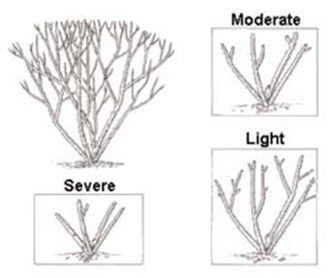
Reduce the rose bush in size by about half is what you are aiming for, but if this doesn’t suit your needs you may wish to only take a third off.
The first thing to do when pruning is to cut off all the dead and damaged limbs of the plant. Take them right back to the base of the plant. Take off any branches that are crossing over, we want to redirect our growth. Take off any smaller branches, anything smaller than a pencil. After this you should be left with thicker, stronger branches. When you prune these main branches, look for outwardly facing buds. If there is no bud, there should be a small bump or leaf scar line.
The reason to look for an outwardly facing bud and not an inward facing one is that we want the new growth to grow in an outward direction, and not start causing crossovers again. Cut about 10mm above the bud and make the cut on a 45 degree angle, this just helps with water run-off if it rains. The reason for this is to prevent water pooling or collecting on the stem which can cause diseases.
Try and make your cuts as clean as possible as this will prevent any dieback from occurring. The rose bush should be looking open and shaped at this point. Once the Spring growth bursts you will have a beautifully shaped plant with plenty of flowers to come.
Standard Roses:
The same rules apply to standard roses as bush roses. You can prune harder with a standard rose, leaving each branch about 15-20 cm long. Take off anything dead or dying. Remove any of the small and spindly growth. Prune the main branches so the standard head forms a vase shaped with at least four strong leaders with outwardly facing buds. Leave the inside of the crown nice and open.
Disease and Pest Control for Roses
Winter Spray
Winter spray will ensure that our roses enter spring free of diseases.
In winter the eggs of insect pests and the spores of diseases over-winter in the buds and in crevices on the stems of roses. This winter spray programme kills these pests and diseases so that in spring when buds open the rose is 'clean' and less likely to be attacked.
Immediately after pruning apply a winter clean-up spray, Lime Sulphur.
One week after the Lime Sulphur application spray roses with Free Flo Copper and Enspray99
Mix order: 1st Free Flo Copper, 2nd Enspray99.
Notes:
Lime Sulphur and oil must never be mixed or sprayed together.
Oil and Copper Oxychloride can be mixed together and is often done as the oil helps the copper to stick to the roses.
Never mix Liquid copper and oil together.
Copper washes off easily and may need to be reapplied after rain.
Copper helps protect new growth from frosts that occur in late spring.
Liquid copper adheres to the leaves better than powdered copper & won’t shrink away from the edge as it dries, thereby ensuring better protection.
Summer Spray
There are two basic methods of spraying roses throughout the growing season.
Preventative Spraying:
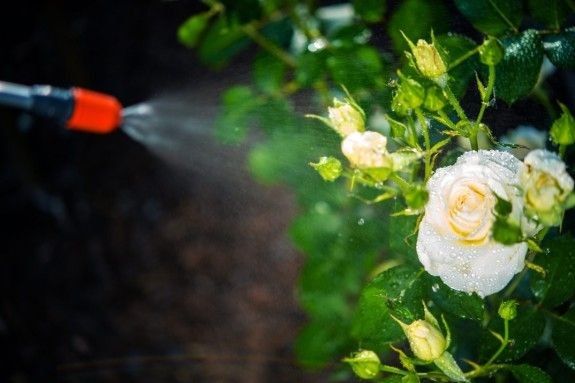
Spray regularly (every two weeks or so) to prevent disease from taking hold. This is highly effective resulting in very clean, glossy, healthy looking roses. Use a combination fungicide /pesticide to control a wide range of diseases and pests, we stock Combat which is a pesticide, fungicide and fertiliser combination. This method is the most effective way to keep roses looking good all season long. Although it is more time consuming and costly, most keen gardeners prefer this method over the second.
Targeted Spraying:
Spray your roses when they are attacked by a particular pest or disease. This way you can spray the most effective spray for the disease your rose has. When your roses are clean, don’t spray at all. You may be surprised by how long your roses go without showing up any disease or pests (or not). The old adage, prevention is better than cure applies here though, so be prepared to spray 2 or 3 times to eradicate stubborn diseases. This method is more for the casual gardener who doesn’t mind the odd bug on their plants.
You also run the risk of disease taking hold. This means the disease is stronger than the spray you are putting on it, resulting in sick looking roses, even dead roses.
Feeding your Roses
Here are our recommendations for feeding, use this as a guide only, all gardens are different and require different nutrients.
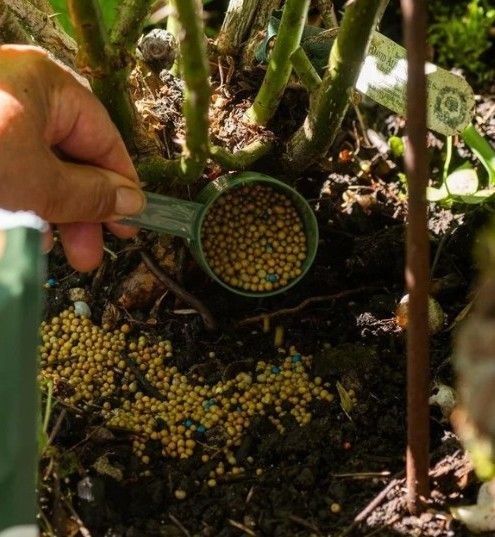
Good Quality Rose Fertiliser: Apply about 3 applications from early Spring to late summer (September to March). This is a complete food containing everything the rose needs. Spread it around the drip line (not against the stem) as the drip line is where the feeding roots are.
Blood & Bone: Gives an immediate burst of nutrients but should only be used once or twice a year in winter.
Dolomite Lime: Apply over your rose garden once every 2 or 3 years to keep acidity down. This is not needed in some gardens. Use a soil PH meter to determine this. A soil ph of between 6 and 6.5 is ideal.
Warning: fresh manure is a no no.